Your home just got hit with water damage. Maybe it was a burst pipe, a leaky roof during a summer downpour, or even a sewer backup. Whatever the cause, your first thought is probably, "Get it dry!" And you're right, that's the absolute priority. But here in Washington, DC, getting it structurally dry is a whole different ballgame than just mopping up puddles or running a fan.
Why "Dry" Isn't Always Dry Enough
When I talk about structural drying, I'm not just talking about the visible stuff. I mean getting the moisture out of the drywall, the subflooring, the insulation, the framing – all the hidden components that make up your home's structure. You see, water is sneaky. It wicks up walls, seeps under floors, and gets trapped in places you can't even see. If you don't remove that hidden moisture, you're just asking for trouble down the line.
Think about it: damp wood can rot, wet drywall crumbles, and trapped moisture is an open invitation for mold. And once mold sets in, you're looking at a much bigger, more expensive problem than just water damage. It's not just about aesthetics; it's about the integrity and health of your home.
DC's Unique Challenges for Structural Drying
Here in the District, we've got some specific things that make structural drying a bit more complex:
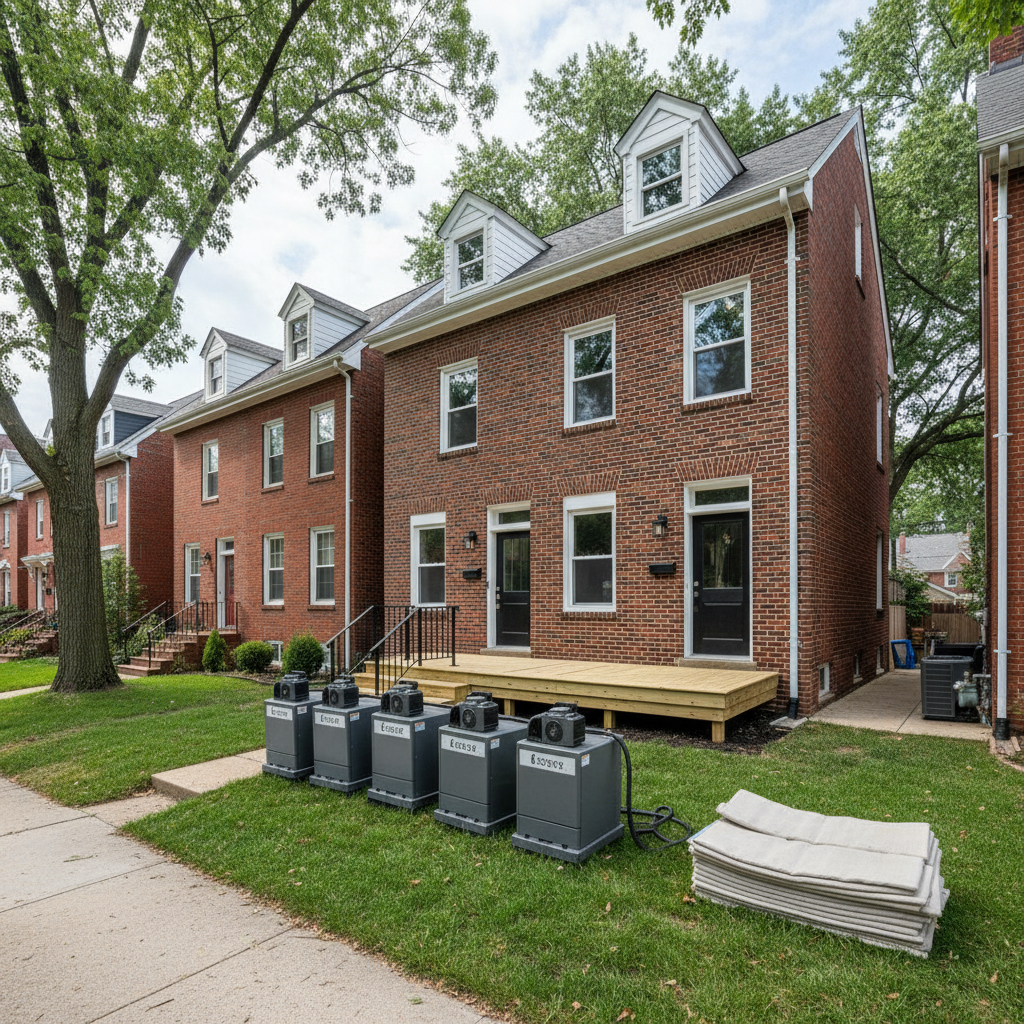
- Historic Homes & Older Construction: A huge chunk of DC's housing stock, especially in neighborhoods like Capitol Hill, Georgetown, or Columbia Heights, is made up of older brick rowhouses. These homes often have plaster walls, lath and plaster construction, or older wood framing that can hold onto moisture differently than modern materials. You can't just blast these with heat and expect quick results; you need a nuanced approach to avoid further damage.
- Humidity & Climate: Our summers are notoriously humid. Even if you dry out the visible water, the air itself is saturated. This means we have to work harder and smarter to pull moisture out of materials and prevent secondary damage. It's not like drying out a house in Arizona.
- Tight Spaces & Rowhouses: Many of our homes are attached rowhouses with shared walls and tight crawl spaces or basements. This makes it challenging to get equipment into certain areas and ensures that moisture doesn't just migrate to your neighbor's property.
- Soil Conditions: We've got a lot of clay in the soil around here. That clay can hold onto water, contributing to hydrostatic pressure and making basements more susceptible to leaks and ongoing moisture issues, which then requires careful drying protocols.
These aren't just theoretical problems; they're things I deal with every week. You can't just apply a one-size-fits-all solution when you're dealing with a 100-year-old brick rowhouse in Adams Morgan versus a newer condo in Navy Yard.
Why Local Expertise Matters More Than You Think
This is where a company like Neighborly Restoration comes in. We don't just show up with a few fans and call it a day. We understand the specific construction types common in DC, the local climate challenges, and the urgency of getting things done right the first time.
When we assess a water damage situation, we're looking at:
- Moisture Mapping: Using specialized meters to find exactly where the water has gone, even behind walls or under floors.
- Strategic Equipment Placement: Not just throwing fans around, but positioning air movers and dehumidifiers to create optimal airflow and pull moisture from affected materials efficiently.
- Monitoring & Adjusting: We constantly monitor moisture levels and adjust our drying plan as needed. It's not a set-it-and-forget-it process.
- Preventing Secondary Damage: Our goal is to dry your home completely, preventing mold growth, structural compromise, and further issues.
You need a team that knows the difference between drying out a modern suburban home and a historic DC property. We've got the experience with everything from burst pipes in federal buildings to basement floods in Dupont Circle townhouses. We know the building materials, the common issues, and the best way to tackle them right here in your neighborhood.
Don't let hidden moisture turn a manageable problem into a nightmare. If you've had water damage, make sure you're getting it structurally dry. It's the only way to protect your investment and your family's health.